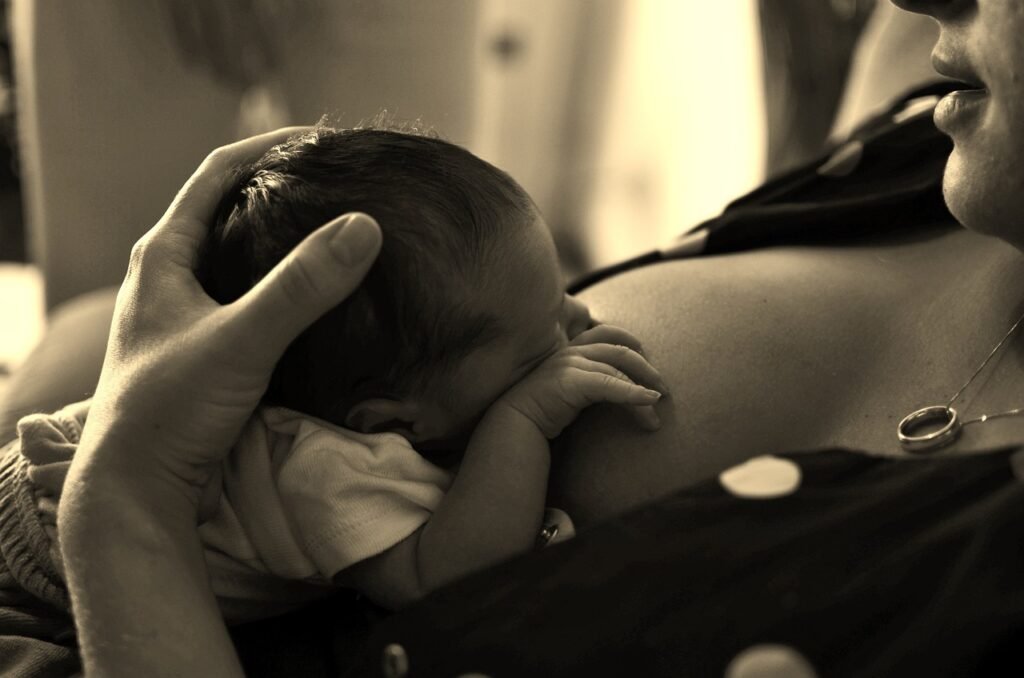
World Breastfeeding Week ends today, and the theme has held up under a week of examination. Breastfeeding for a Sustainable Start in Life: Strengthen What Works.
We did not propose anything new this week. Every recommendation we shared has been standing WHO and UNICEF guidance for years. Breastfeed within the first hour. Only breast milk for six months, no water. Add good food at six months and keep breastfeeding to two years. That is the whole scientific content.
What we spent the week on was the part that actually determines whether any of it happens.
We looked at the beliefs still circulating in Nigerian households, and where they come from, and why treating grandmothers as obstacles rather than the most powerful allies available is a strategic error. We looked at what a breastfeeding mother needs to eat, which turns out to be one extra plate of ordinary local food rather than anything expensive. We looked at fathers, and at the finding that household attitudes predict exclusive breastfeeding more reliably than most things a clinic can do. We looked at what the law already provides working mothers, and at the market traders it does not reach. We looked at the six to twenty-three month window, where 12 per cent dietary diversity and 41 per cent sweet drink consumption tell a difficult story about what is going into very small stomachs.
Underneath all of it sit two numbers we opened with. Exclusive breastfeeding at 29 per cent. Early initiation down from 42 per cent in 2018 to 36 per cent in 2023.
We are not going to pretend a week of posts changes those. Behaviour at that scale moves through households, health facilities, employers and policy, over years. What a week like this can do is put accurate information into the hands of people who will be in the room when it matters, and ask them for something specific.
So here is the specific thing.
For policymakers and state governments: 12 of 36 states plus the FCT currently offer paid maternity leave of up to six months, according to UNICEF Nigeria in 2025. Twenty-four states do not. Extending that is a known, costed, achievable policy move with a measurable effect on exclusive breastfeeding rates.
For health workers: the first hour is decided in your hands. Skin-to-skin contact immediately after birth, the baby put to the breast within sixty minutes, and no routine offering of anything else. The Ten Steps to Successful Breastfeeding, from WHO and UNICEF, set out the rest.
For employers: identify the room. Not the toilet. A door that closes, a chair with back support, somewhere cool to keep expressed milk, and breaks a mother can plan around.
For families: cook the extra plate. Take the baby so she can sleep. Put the water where she can reach it. Say the encouraging thing.
And for everyone reading, we are asking for one commitment, which we would like you to make publicly.
I will support breastfeeding in my home, my workplace or my community. I will share what I have learned and stand with nursing mothers.
Sign it, take your badge, and nominate two people to do the same. It is a small act. Small acts, repeated by enough people, are how a national indicator moves.
Thank you for a week of attention. Teach. Amplify. Sustain.
Sign the pledge and nominate two people to do the same. Call to action. Take the pledge. Download your badge and certificate. Subscribe to The Echo. Hashtags. #TakeThePledge #FirstWaveOfCare #WBW2026 #EkoNutrition
Challenge Tweet