My grandmother could read the sky. She knew when the rains were late, when the heat would sit too long, and which year the yams would come up smaller than the one before. She did not call it climate adaptation. She called it cooking.
She planted what she could trust to grow. She cooked what the season gave her. She wasted very little. And without ever using the phrase, she knew exactly what climate-smart eating in Nigeria looked like.
This World Environment Day, with the global theme this year being “Inspired by Nature. For Climate. For Our Future,” we want to talk about something most nutrition conversations skip over. The food on Nigerian plates is already changing because of the climate, and the answers we are now reaching for from research institutes and donor reports are mostly answers our grandmothers already lived.
What Climate Change is Doing to What We Eat
The rains do not fall the way they used to. Northern Nigeria is hotter and drier than it was twenty years ago. Coastal flooding pushes salt into farmlands that used to grow vegetables. Maize yields drop in bad years, and tomato prices swing wildly because the harvest is unpredictable.
None of this is theory. Every Nigerian family feels it at the market.
What this means for nutrition is harder to see but more serious. When staple crops fail, families fall back on whatever is cheapest, and cheapest is often the most processed and least nutritious. The double burden of malnutrition in Nigeria—where undernutrition and obesity exist side by side—is partly a climate story. Diet quality cannot be separated from food availability, and food availability cannot be separated from the weather.
The Foods That Hold Up
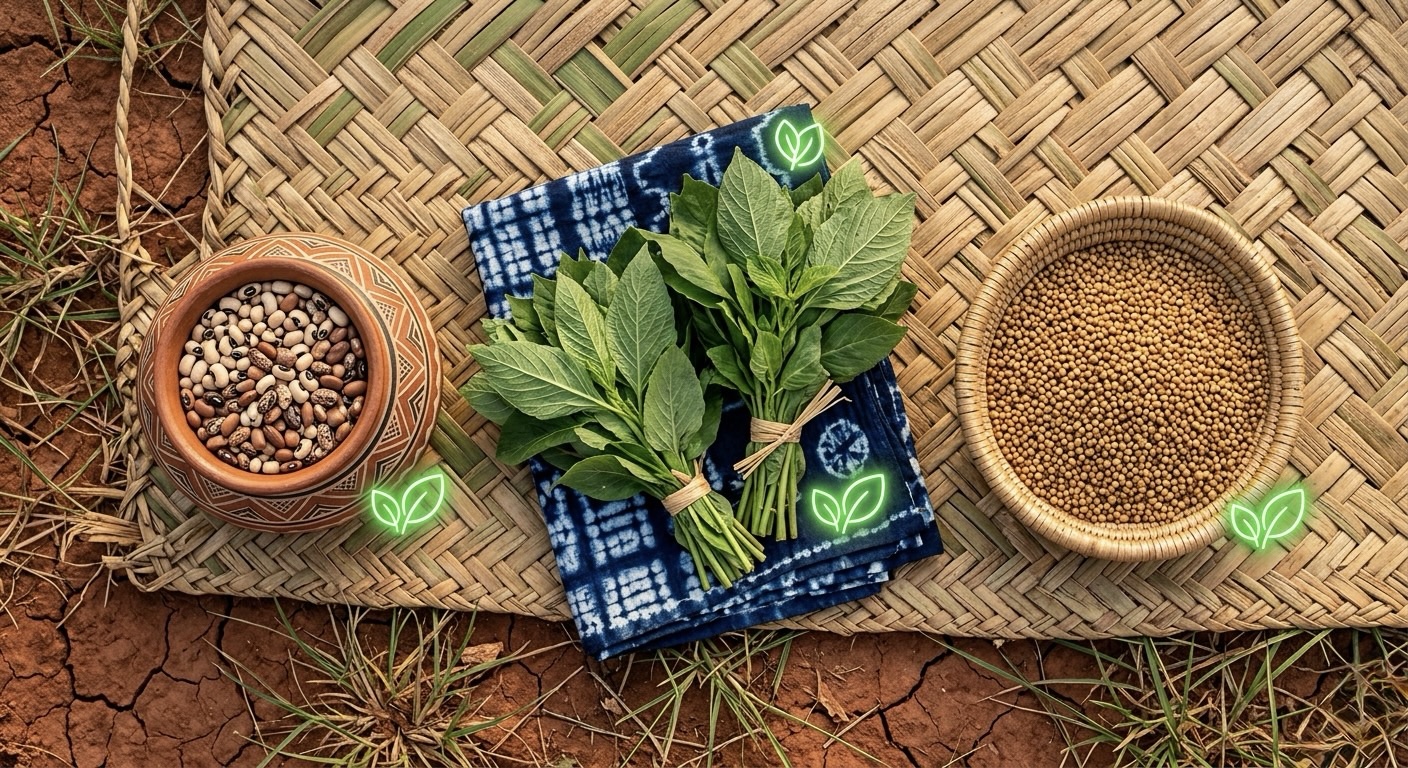
Some Nigerian foods are remarkably tough. They are climate-smart crops in the truest sense, but they are not new discoveries. They are foods Nigerians have grown and eaten for centuries:
Cowpea (Ewa): This staple bean grows in poor soil and tolerates drought far better than most imported crops.
Ewedu: The leafy green our parents grew up eating is one of the most nutrient-dense vegetables on the continent, and almost nothing about it needs ideal conditions to grow.
Millet: Once a daily grain in northern Nigeria, millet can produce a harvest in conditions where maize simply cannot.
There is a quiet irony in how much money and conference time goes into “finding” climate-resilient crops for African food systems when many of them are already on our plates. The work is not to invent. The work is to remember, to celebrate, and to make sure the next generation grows up knowing why these foods matter.
Why This is a Nutrition Issue, Not Just a Climate One
It would be easier if climate-smart eating meant only environmental virtue. It does not. The same indigenous foods that hold up under climate stress also happen to carry the exact nutrition profile Nigerian families need most.
Cowpea is one of the most affordable sources of plant protein in West Africa. Ewedu carries iron, calcium, and folate in a form that complements rice and other staples beautifully. Millet has more protein and minerals than the polished white rice that has replaced it in many households.
When we eat the foods that grow well here, we eat better. When we eat better, we are healthier. When we are healthier, our communities are stronger. The chain is short, and it is true everywhere we work.
What EKO Nutrition is Doing About It
At EKO Nutrition Empowerment Foundation, our Youth-Led Climate-Smart Nutrition Hub trains young Nigerians across the country to teach climate-smart nutrition in their own communities.
We focus on indigenous crops like cowpea, ewedu, and millet because they sit exactly where climate resilience and good nutrition meet. We teach in schools, integrate these concepts into school gardens, run community sessions, and tell these stories online for the families who cannot attend in person.
This is not a campaign about going backward. It is about going forward with the best of what we already have.
One Thing You Can Do This Week
Pick one meal in the next seven days and cook it with a climate-smart food you already know.
A pot of beans.
A plate of ewedu and amala.
A bowl of millet pap for breakfast.
Notice how it tastes. Notice how it makes you feel. Then, send the recipe to one person in your family who might have forgotten it. That is climate action on a plate. And it has been here all along.
EKO Nutrition Empowerment Foundation teaches nutrition, amplifies community voices, and works for resilient food systems across Nigeria. Follow us on Instagram and TikTok @ekonutrition and join our WhatsApp community for weekly nutrition lessons rooted in real Nigerian food.