There is a conversation Nigerian families do not have enough, and it is one that costs lives every year. Food safety in Nigerian homes is treated as common sense, the kind of thing you grow up knowing without anyone teaching you. But food safety is not common sense. It is information, and the information available to most families is inconsistent, contradictory, or absent entirely. This World Food Safety Day, with the 2026 theme being “From burden to solutions – safe food everywhere,” we want to put some of it down clearly. At EKO Nutrition Empowerment Foundation, we believe knowledge is the most critical nutrient, and safe handling is where nutrition begins.
Food safety belongs inside nutrition, not beside it. A plate of vegetables that should be feeding a child can instead send that child to the hospital if the food was washed in contaminated water, stored at the wrong temperature, or handled without clean hands. The most beautifully balanced meal in the world is undone by a single unsafe step before it reaches the table.
The Nigerian Reality
According to the landmark 2026 edition of the World Health Organization’s estimates of the global burden of foodborne diseases, released just this week, the crisis is more severe than previously thought. Unsafe food now causes an estimated 866 million illnesses and 1.5 million deaths globally every year.
The burden does not fall evenly. The African and South-East Asian regions account for nearly three-quarters of all foodborne illnesses and 60% of global deaths. Furthermore, children under five face almost three times the risk of illness compared to older demographics, bearing nearly one-third of the total disease burden. In Nigeria, diarrheal disease remains one of the leading causes of death in young children, and a meaningful share of those cases trace back to unsafe food and water in the home.
This is not a problem “out there.” It is a problem at our kitchen tables, our market stalls, and the way our street food is prepared.
The good news is that a small number of changes, done consistently, prevent most foodborne illness. They are not expensive. They are not complicated. They just need to be taken seriously.
Five Things Every Nigerian Kitchen Should Know
Wash hands properly, not symbolically. Twenty seconds with soap and water before handling food and after handling raw meat or fish. Most of us rinse. Rinsing is not washing.
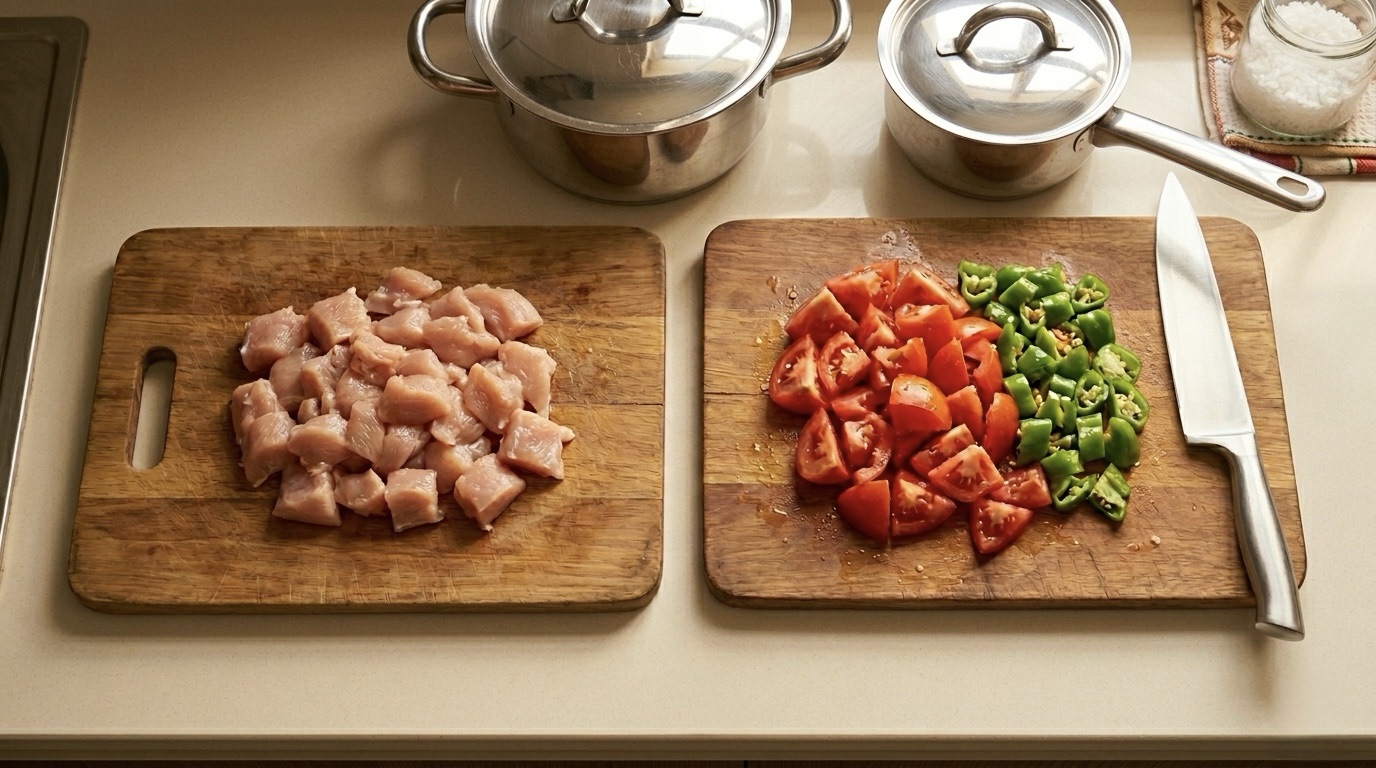
Keep raw and cooked food apart. The same chopping board that just held raw chicken should not be used for tomatoes you are about to eat fresh. The same bowl, the same knife, the same hands all carry bacteria from one to the other. A second board and a quick wash in between costs nothing and prevents a lot.
Cook to actually kill bacteria. Chicken, beef, fish, eggs, and meat need to reach internal temperatures high enough to kill harmful organisms. The visual cue is simple: no pink in the middle, juices run clear, no soft uncooked center. If you cannot tell, cook it longer. Undercooked protein is one of the most common sources of food poisoning in homes that otherwise eat well.
Be honest about leftovers. Cooked food left out at room temperature for more than two hours is no longer safe, especially in Nigerian heat. Either refrigerate quickly or finish the meal. Reheating something that has been sitting out since morning does not undo the bacterial growth.
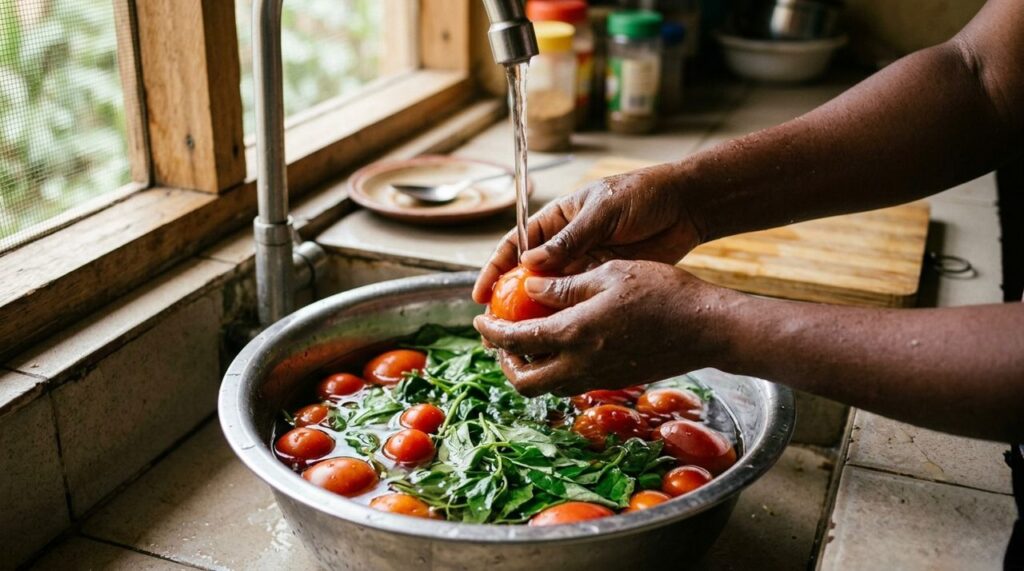
Trust your water source. Wash vegetables and fruits in clean, filtered, or treated water, not the bucket of standing water that has been used for everything else. If the water you are washing with is questionable, the food washed in it is questionable too.
Where Food Safety Meets Nutrition Policy
When children get sick from contaminated food, they cannot absorb the nutrients in the food that follows. Repeated episodes of diarrhea in early childhood are one of the documented drivers of stunting, which affects roughly one in three Nigerian children under five. So food safety is not separate from the malnutrition conversation. It is one of the things that quietly determines whether the nutrition we work so hard to deliver actually reaches a child’s body.
This is why EKO Nutrition treats food safety as a core part of community nutrition education, not a side topic. When our team runs community sessions on eating well, we include the handling, storage, and preparation pieces. Because cooking the right food the wrong way still leaves a family hungry.
What You Can Do This Week
Pick one of the five above. Just one. Practice it consistently for the next seven days until it becomes the way you cook by default. Then pick the next one. Habits stick when they are added quietly, one at a time, into the rhythm of how you already live.
Food safety is not extra work. It is the floor under everything else nutrition is trying to do.
EKO Nutrition Empowerment Foundation works at the intersection of nutrition, food systems, and community health across Nigeria. For weekly practical lessons on Nigerian food and family nutrition, follow @ekonutrition on Instagram and TikTok or join our WhatsApp channel.