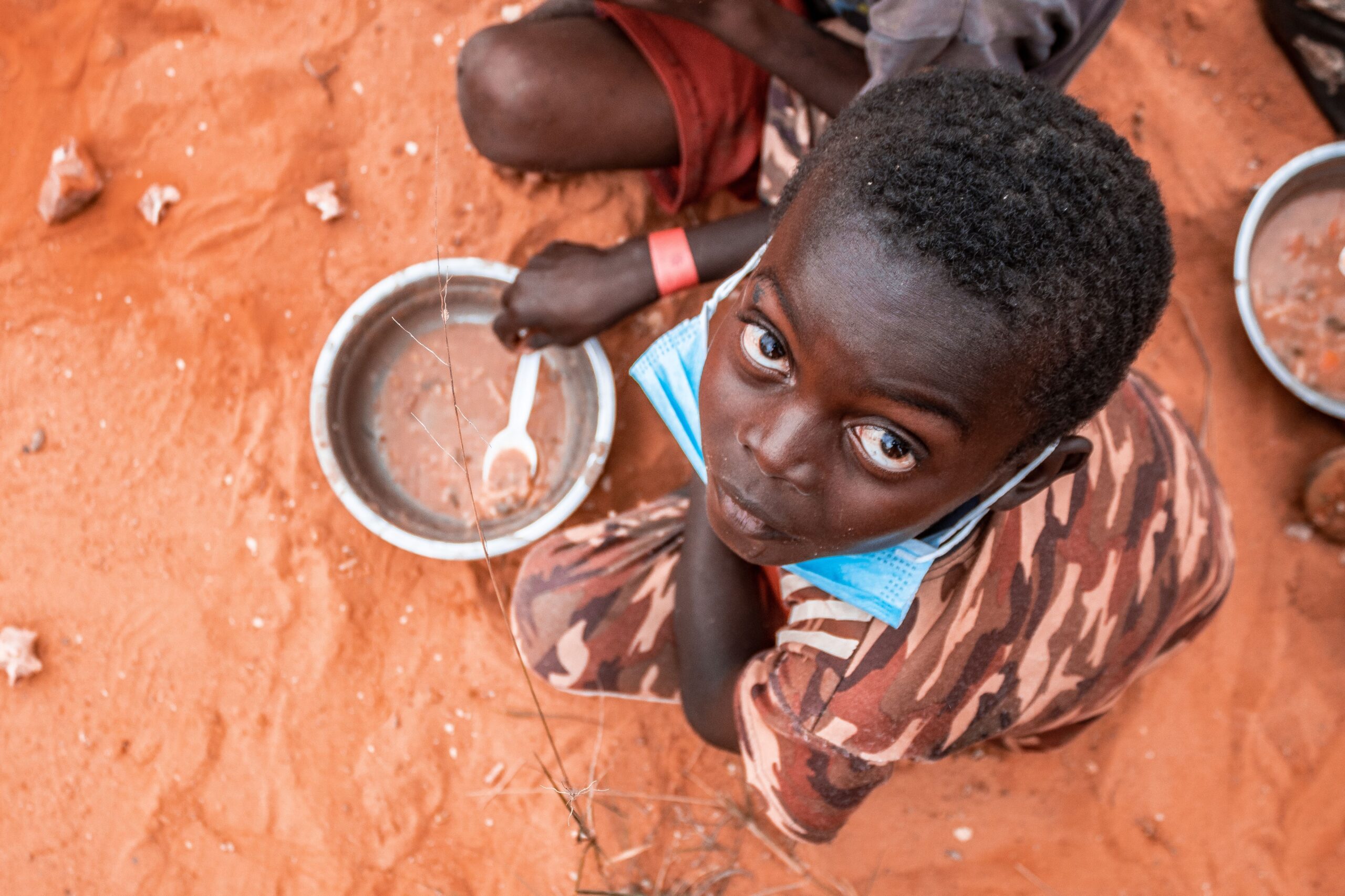
World Hunger Day passed on May 28. The theme this year was “The End of Hunger Is in Our Hands.” That phrase sounds hopeful. It is also, depending on where you sit, either deeply motivating or quietly infuriating.
At EKO Nutrition, we chose not to let it pass without saying something real.
Our programs team spent time pulling together the numbers, the context, and the comparisons that do not usually make it into polite conversations about hunger. What they found was not surprising to anyone doing this work. But it is the kind of information that deserves to sit in one place, clearly stated, so that anyone who reads it cannot reasonably look away.
This is that post.
The Scale of What We Are Talking About
35 million Nigerians are currently facing acute food insecurity. That is not a projection from a pessimistic model. That is the World Food Programme’s figure for 2026. To put it in context, 35 million people is more than the entire population of several African countries combined.
FAO narrowed the picture further: 30.6 million people across 26 states and the FCT are projected to face acute food and nutrition insecurity at Crisis level or worse during the June to August lean season alone.
The worst-affected states are in the north: Borno, Yobe, Adamawa, Sokoto, Zamfara, Katsina. The northeast, where conflict has run deepest and longest, accounts for nearly 5.8 million people in severe food insecurity this year. In parts of Borno, WFP has warned that some communities are approaching famine-like conditions.
These are not failed states far away from you. These are Nigerian states.
Children Are Paying the Highest Price
Nigeria has one of the world’s highest burdens of child malnutrition. That is not a ranking anyone should be comfortable with.
32% of Nigerian children under five are stunted. Stunting is not just about height. It is about brain development that does not happen, school performance that suffers, and economic productivity that gets foreclosed before a child ever has a chance to build it.
Around 2 million Nigerian children suffer from Severe Acute Malnutrition every year. Of those, only about 2 in every 10 receive treatment. The other 8 are largely left to chance.
Malnutrition contributes to 45% of under-five deaths in Nigeria. Nearly half. The World Bank and UNICEF have linked malnutrition-related productivity losses to up to 11% of Nigeria’s GDP. Hunger today is economic collapse tomorrow.
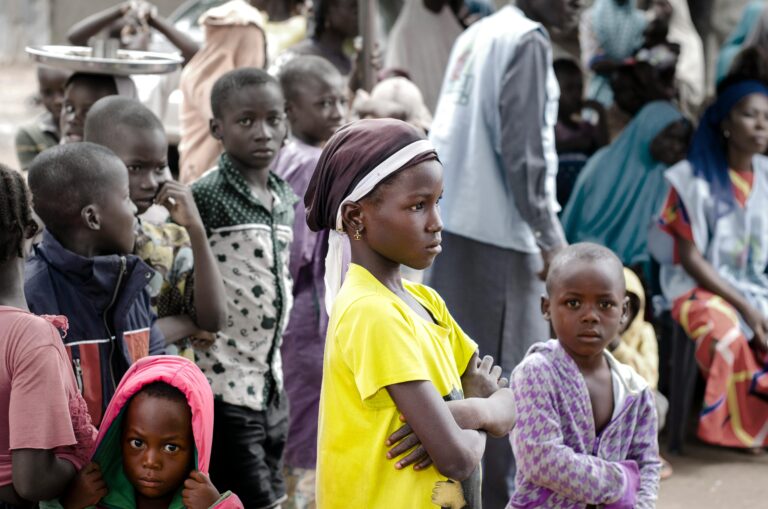
How Nigeria Compares
When you place Nigeria next to other African countries on the Global Hunger Index, the picture is not flattering. Ghana performs better. South Africa ranks lower on hunger severity. Kenya, with its own challenges, holds a comparable or slightly better position across several indicators.
Nigeria sits worse than most of its peers in West Africa and significantly below where a country of its resources and agricultural potential should be. The Democratic Republic of Congo and Sudan rank worse, but both are engulfed in active large-scale conflict. Nigeria’s own crisis is also conflict-driven in key regions, but that conflict is not the only story.
Globally, Sub-Saharan Africa continues to carry the highest burden of food insecurity. East Asia and parts of Latin America are improving. The Sahel, the Horn of Africa, and West Africa are getting worse. Nigeria is in that worsening band.
Why Does This Happen in a Country With Fertile Land?
This is the question that matters most, and it is where the conversation usually breaks down into either despair or oversimplification.
Hunger in Nigeria is not a production problem alone. Nigeria has fertile land. It has favorable climate zones. It has a young, large population. And yet millions cannot access enough food. The reasons are systemic.
Poverty and inflation mean that even when food exists, many families cannot afford it. Conflict, banditry, and insecurity in farming communities have pushed many farmers off their own land. Climate shocks, including flooding, drought, and desertification, are now one of the biggest drivers of food loss before food even reaches a plate. Post-harvest losses, caused by poor storage infrastructure, bad roads, and absent cold-chain systems, mean large quantities of food that was grown simply never gets eaten. Weak supply chains mean abundance in one region and scarcity in another.
There is also what nutritionists call “hidden hunger.” People may eat enough calories and still be deficient in iron, zinc, vitamin A, or protein. Children and pregnant women suffer this most acutely, and it does not show up in hunger statistics the way famine does.
What Is Actually Working
The picture is not entirely bleak, and it would be dishonest to frame it that way.
Climate-smart agriculture is showing results. Drought-resistant crops, regenerative farming practices, and improved irrigation are helping communities build more resilient food systems in places where they have been supported to do so. Community-based nutrition programs that work directly with local populations have consistently outperformed top-down interventions. School feeding programs are improving child nutrition and school attendance at the same time. Women-focused agricultural support has some of the strongest outcome data in the sector, because women remain the primary managers of household nutrition across most of Nigeria.
The solutions are not mysteries. The challenge is sustained investment, policy implementation, and local ownership.
Why This Post Exists
We said at the start that our programs team built this for a carousel that never went live. The design timeline did not cooperate. But the work was done and the research was real, so we made a choice to bring it here instead.
There is something important in that decision beyond just not letting good work go to waste. The people on our team who pulled these statistics, read these reports, and organized this information did so as volunteers. They did it because they believe the conversation matters.
World Hunger Day comes and goes every year. The theme changes. The social media posts get made and disappear. What does not disappear is the 2 million children currently at risk of severe acute malnutrition, or the families in Borno who cannot access safe food.
The end of hunger may well be in our hands. But it requires more than awareness. It requires people who are willing to do the work even when the design does not come together, even when the post goes up late, even when it is easier to stay quiet.
That is who our team is. And if you are reading this, we hope it is who you are too.
EKO Nutrition Empowerment Foundation works at the intersection of nutrition education, food security, and climate-smart food systems. Our programs run across Nigeria with communities, schools, and health facilities. If you want to get involved, visit ekonutrition.org.